
They slept for 10 hours. Why are they still struggling?
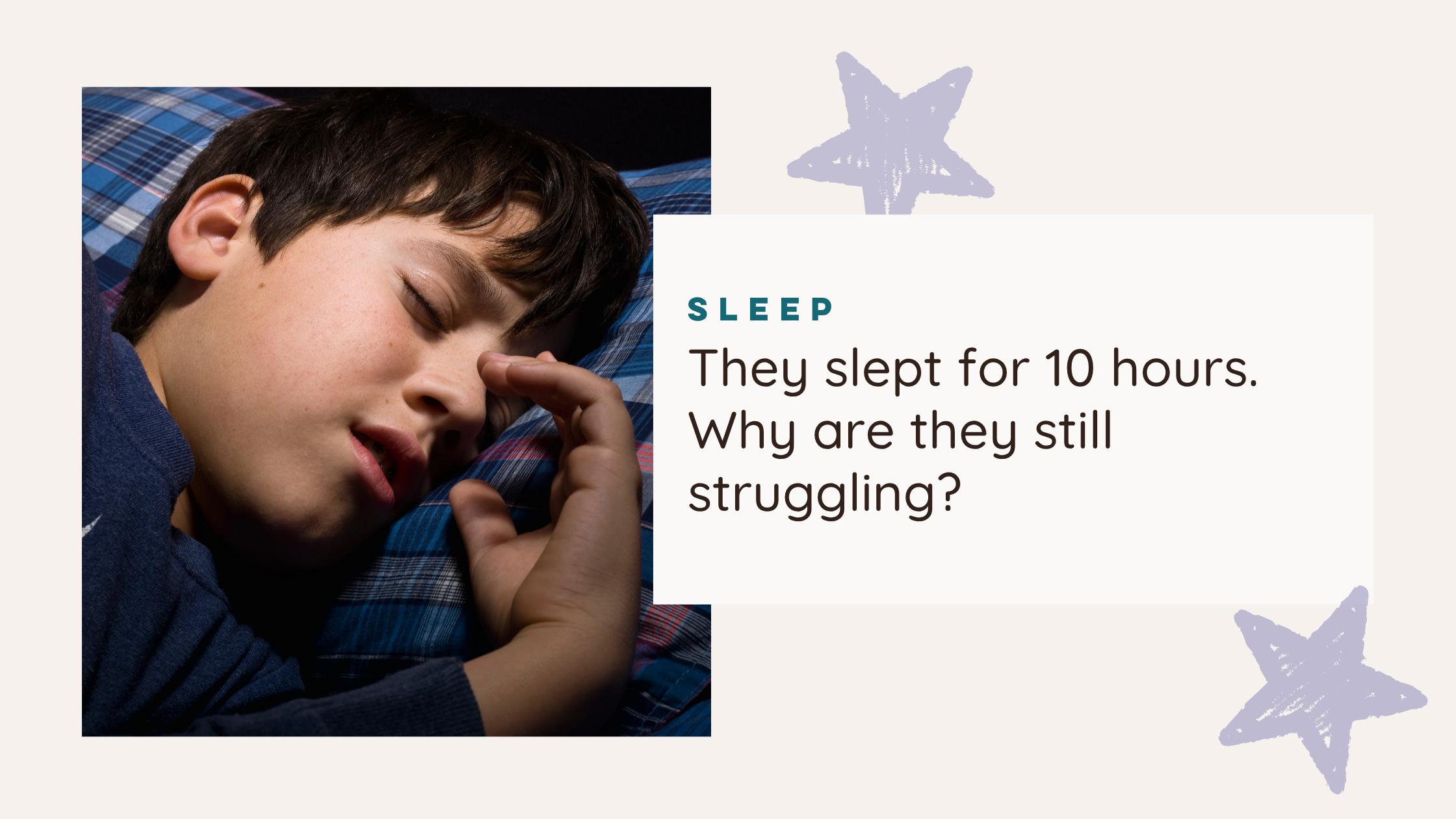
Asleep by 8pm, awake at 7am. Eleven hours of sleep.
That sounds perfect! But for some reason, you’re standing in the kitchen at 8:30am dealing with your child’s meltdown because their toast is cut the wrong way.
You’re not imagining it. Something is off.
And the answer usually isn’t that they need more sleep. It’s that the sleep they’re getting isn’t actually doing what sleep is supposed to do.
Hours in bed is not the same as rest
This is the piece that most parents have never been told.
We measure sleep in hours. That’s the number the pediatrician asks about, the number the parenting books give you, the number you track when you’re trying to figure out what’s going wrong. BUT hours in bed and restorative sleep are two different things.
You can spend 10 hours in bed and wake up more exhausted than when you started. Most adults have felt that at some point. Kids feel it too. They just don’t have the words for it, so it comes out as behavior - tantrums, mood swings, meltdowns, poor attention, etc.
What’s happening during sleep when the airway is involved
When the airway is inadequate, the body works harder to breathe during sleep.
The extra effort may be subtle. There may not be dramatic snoring or gasping. But the effort can pull the nervous system out of the deeper, more restorative parts of sleep. It can happen dozens of times a night. The child never fully wakes up. You never know it happened, but the body felt all of it.
What follows is sleep that doesn’t recover. The hours were there. The depth wasn’t.
I learned this about myself before I learned it about my daughters. I spent years sleeping with what should have been enough and waking up tired. I thought that was just how I was wired. It wasn’t. My airway is narrow, which I only found out after an airway dentist sent me for imaging. Once I started addressing it, the difference was night and day.
My daughters have been the same way. Good sleepers by the “normal” measures. Getting at least 11 hours, not snoring, etc. They were still exhausted. Falling apart throughout the day. The sleep looked fine on paper, but it wasn’t.
What it looks like at home
This is the part that usually makes parents pause.
The child who’s hard to wake up and grumpy for hours after. The one who gets sick constantly, whose immune system never quite gets on top of things. The one who can’t regulate emotions in the afternoon, who melts down over small things, who teachers describe as unfocused.
These things get labeled as behavior issues. Sensory issues. Anxiety. Attention problems. Sometimes they are those things. But sometimes they’re a tired nervous system that didn’t get to rest, and no one has connected it back to the airway.
I’m not saying every struggling kid as an airway issue. I’m saying this connection is worth knowing about, because it almost never gets brought up at a regular well-child visit.
Why your doctor probably didn’t mention this
A routine pediatric visit isn’t designed to assess airway function or sleep quality as a connected system. That’s not a criticism, but a time and training issue. Pediatricians are covering a lot of ground quickly. Sleep questions usually stop at “is your child getting enough hours?”
So parents leave with a clean bill of health and come home to the same impossible mornings. Not because nothing is wrong. Because the right questions weren’t part of the visit.
If you’ve raised concerns and been told not to worry, I want you to know: you’re allowed to keep asking. Especially if the pattern persists.
A question worth sitting with: If you set aside the hours-in-bed number and just watched your child, what would you notice?
How they feel when they wake up?
How they function by noon?
How hard it is to get through a regular day?
Those observations are worth more than the number of hours asleep. And it’s usually the thing that points you in the right direction.
If you’re watching your child and something still doesn’t add up, even though sleep “should” be fine, I’d love to hear from you. You can reach me on instagram, or if you want to understand more about what airway actually looks like and what to do about it, stay tuned, there’s more coming.