
The sleep sign nobody told you to look for
As parents, we may do a lot of last checks before bed.
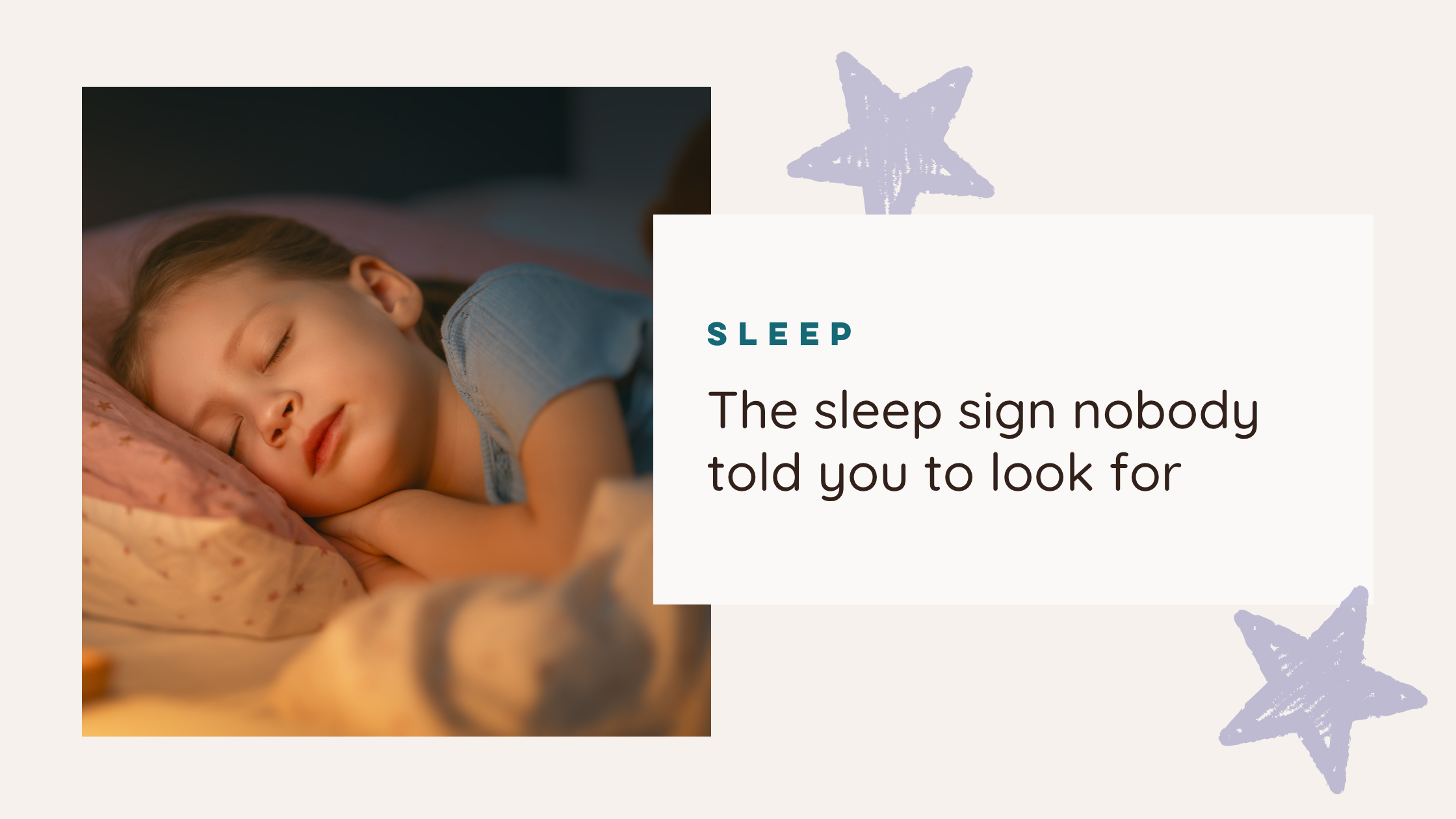
It's the kind of thing you do automatically — peek in, make sure everyone is asleep, before heading into your bed. I would do this check-in on my oldest daughter when she was younger. She was sound asleep. Completely still. Looked totally fine.
Her mouth was wide open.
I tucked her in and walked out.
I had started learning about myofunctional therapy at the time. I was learning that mouth breathing was concerning. I knew enough to realize it was happening, but not enough to know what to do about it.
That's the thing about this sign. It doesn't look alarming. It looks like a sleeping child.
Why we miss it
Nobody tells you to look for this.
When your child falls asleep, the goal is usually just to get them to sleep. You're not standing in the doorway running a clinical assessment. You're relieved. So the open mouth doesn’t register — just a quirk, just how they sleep, just one of those things.
And because it's not dramatic, no gasping, no snoring, just a small gap where the lips should meet, it doesn't feel like a signal. We see mouth breathing children and adults depicted as normal sleep in pictures, tv shows, and movies.
Missing it doesn't mean you weren't paying attention. It means this isn't on most parents' radar. No one has told you to look for it.
What the open mouth is actually telling you
The mouth falling open during sleep isn't a habit or a personality trait. It's the body finding a workaround.
When the airway is narrow or partially obstructed, breathing through the nose becomes harder work than it should be. The body is practical. It finds another way. So the mouth drops open, breathing continues, and everything looks fine.
But the open mouth isn't the problem. It's a sign that something is making nasal breathing difficult. The body was never designed to run its backup system full-time.
What you might already be noticing during the day
This is the part that tends to land for parents.
The child who slept ten hours but woke up exhausted. The moodiness before breakfast. The focus that's fine at 9am and gone by noon. The behavior that looks like a lot of things — sensory quirks, attention difficulty, just being a kid — but never quite resolves no matter what you try.
When the airway is working harder than it should during sleep, the body doesn't get the rest it needs. The sleep hours are there. The quality isn't. And kids show you that in the morning and throughout the day.
I saw this with my own daughter. The ear infections, the emotional swings, the exhaustion that didn't match the hours she'd spent in bed. I kept looking for explanations.
"But her doctor said it's fine"
I hear this a lot.
Pediatricians are covering a lot of ground in a short visit. Airway function, oral rest posture, how the jaw is developing — that's not always part of the screen. So parents bring it up, get told not to worry, and go home.
Fine and normal are not the same thing.
Something can be common — meaning lots of kids do it — and still be worth looking into. Mouth breathing during sleep is one of those things. It's worth paying attention to even if everyone you've asked so far has shrugged it off.
One thing to do tonight
You don't need to make any calls or do any research right now. Just this: after your child falls asleep tonight, peek in. Is their mouth open? Take a short video if you can — something to refer back to later. Notice whether this is a one-time thing or a pattern.
That's it. One observation.
It's a small thing. But it's the kind of small thing that changes what you ask at the next appointment.
If you're not sure what to do with what you notice, or you've already been told not to worry and you're still not convinced, that's exactly what I'm here for. You can reach me here or follow along for more on what airway actually looks like in real life — in kids and in adults.